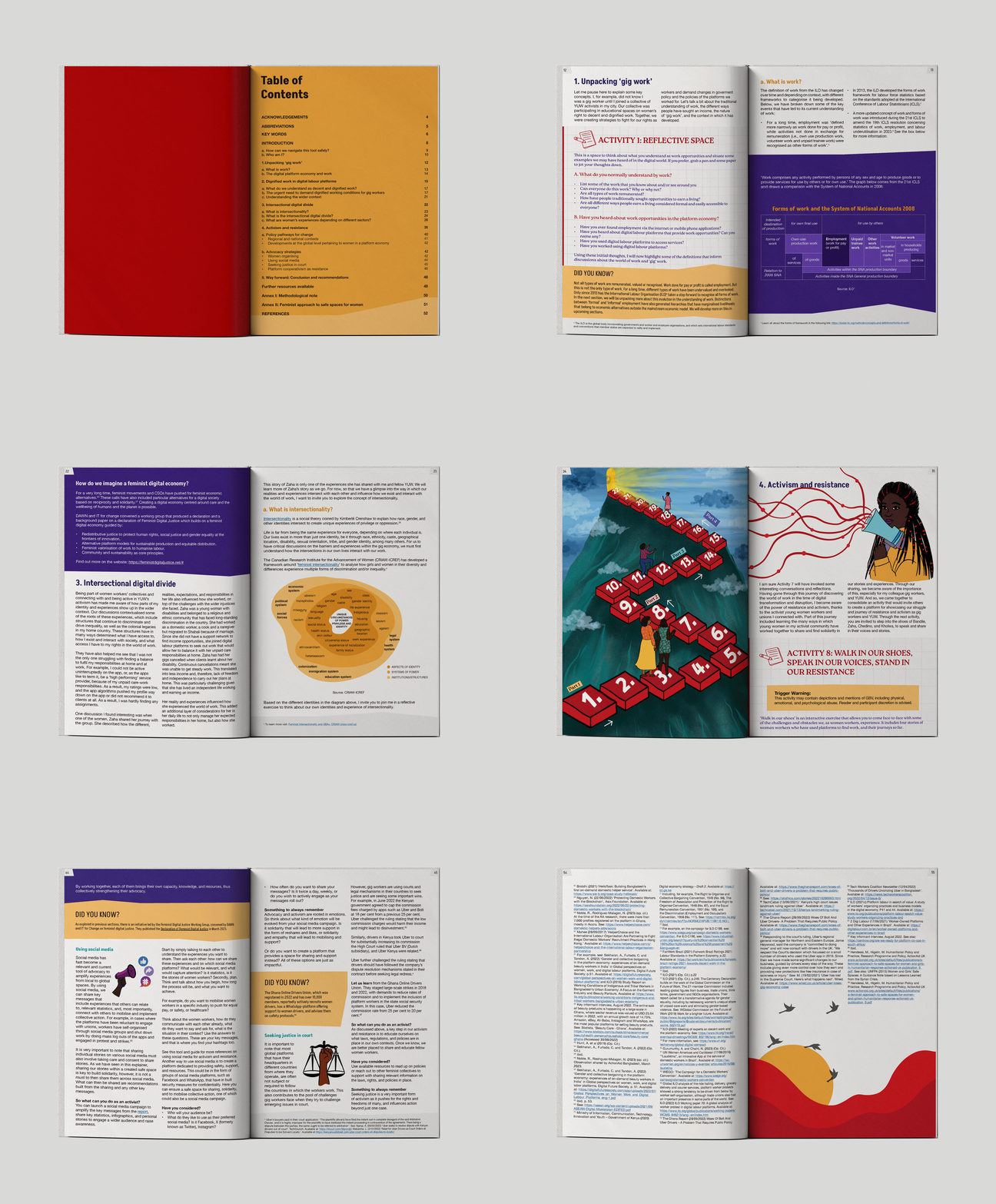
Designing Resilience: The Gig Economy Advocacy Report
with ActionAid UK
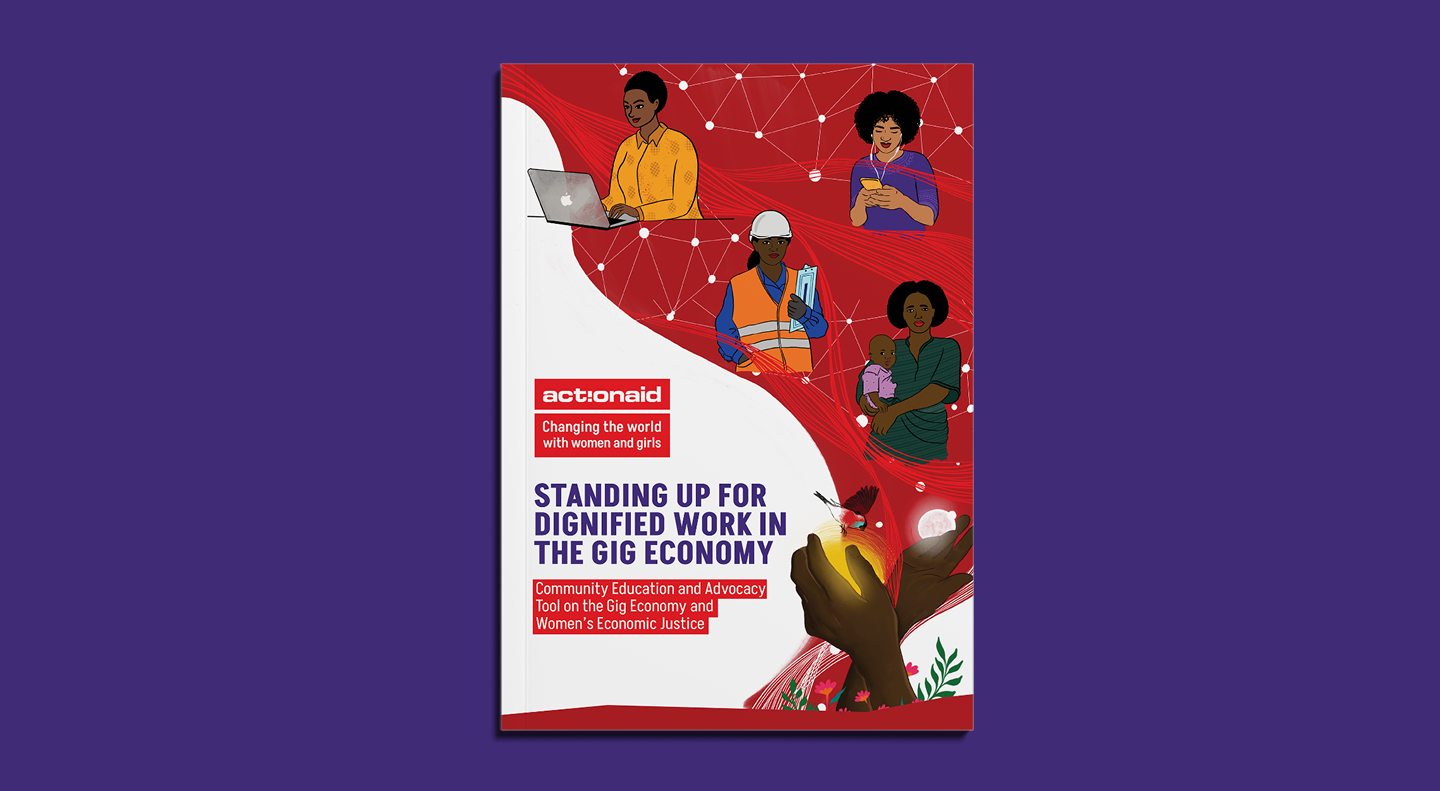
Client
ActionAid UK
Relationship
Since 2021
Services
Visual Design, Illustration, Print and publication Design, Art Direction
A Tool for Women’s Rights
This report is a tool for advocating women’s rights in the gig economy, highlighting challenges and strategies.
Designing a Community Tool for Women in the Gig Economy
In the digital age, where work is increasingly mediated by platforms, the concept of dignified work often becomes blurred. For ActionAid UK, ensuring that women in the gig economy have access to dignified, fair, and safe work opportunities was a pressing priority. Our design journey with ActionAid UK sought to transform this concern into a tangible, accessible, and actionable tool – the “Community Education and Advocacy Tool on the Gig Economy and Women’s Economic Justice.”
Our Process
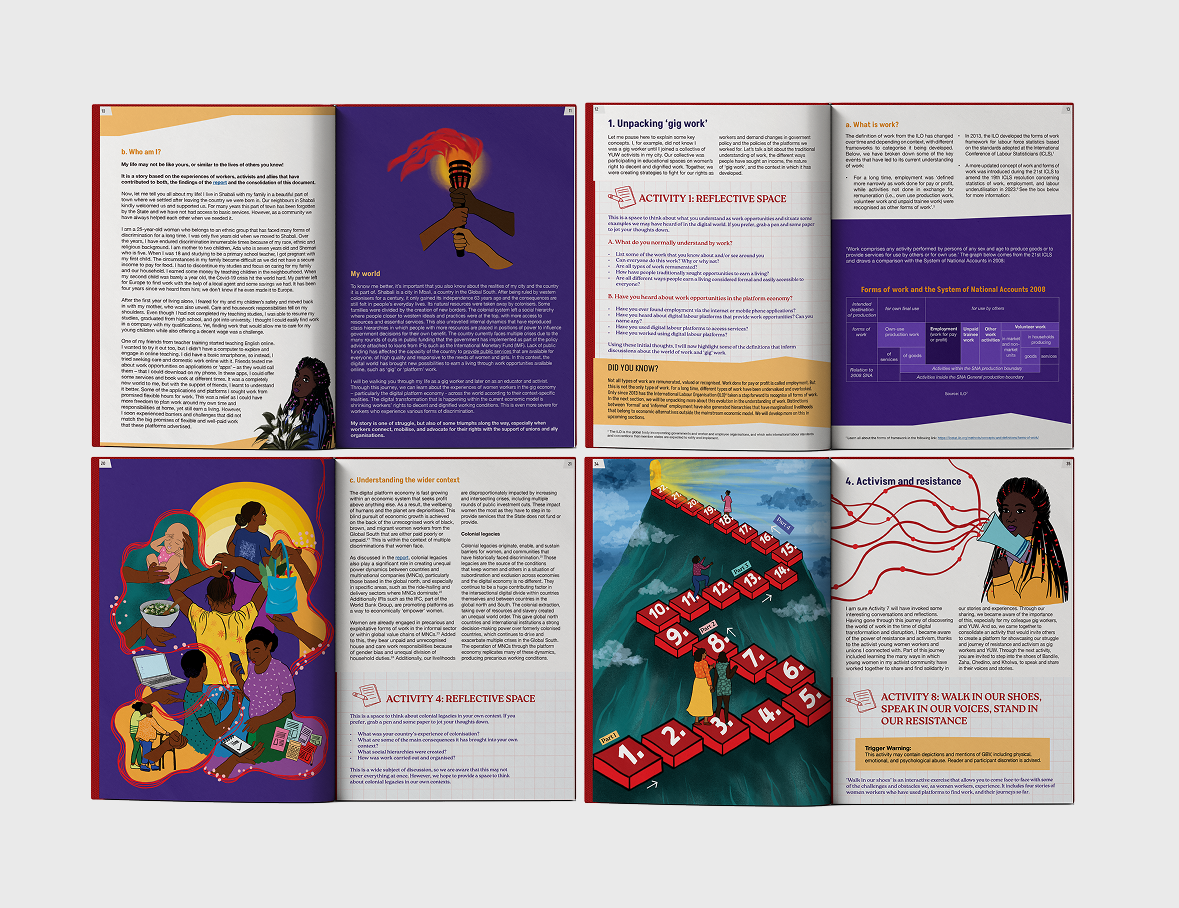
Our design journey began with a deep dive into understanding the issues surrounding women’s work in the digital gig economy. Collaborating closely with ActionAid UK’s team, we aimed to create a publication that was not just a report, but a community tool – one that could educate, empower, and advocate.
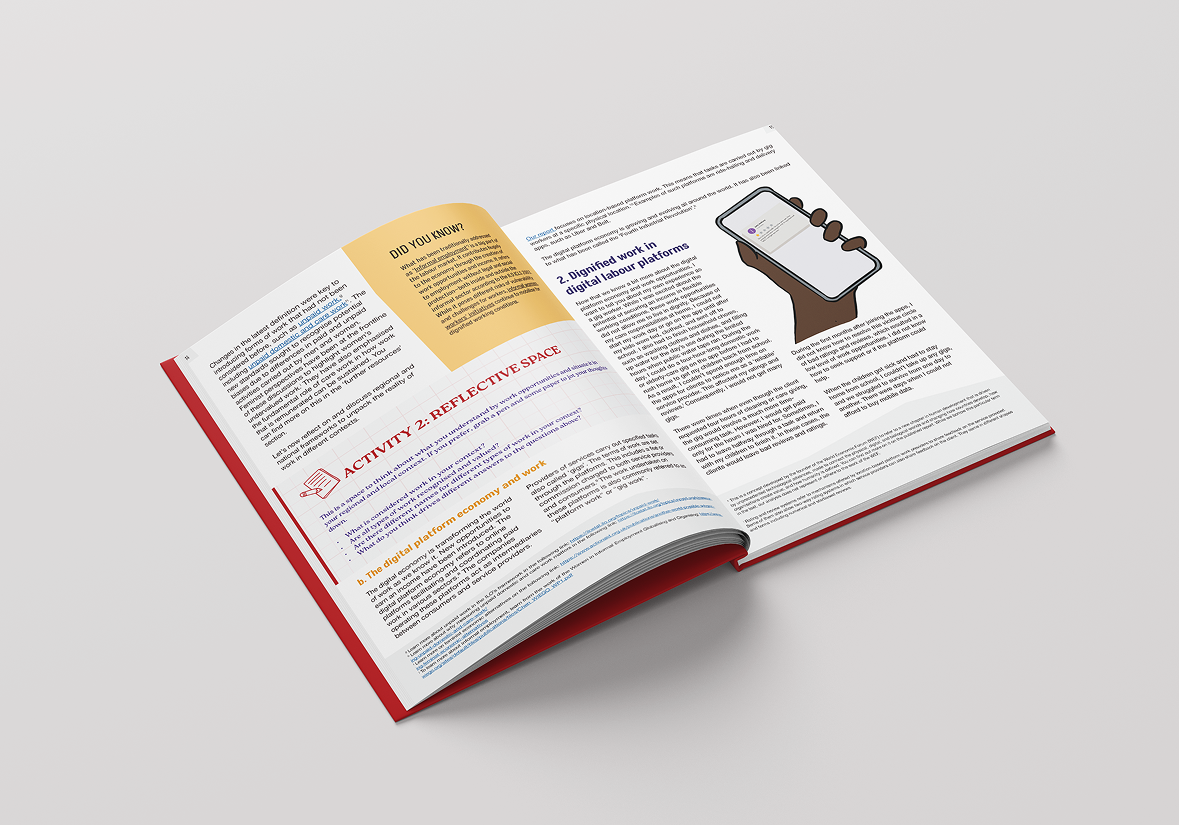
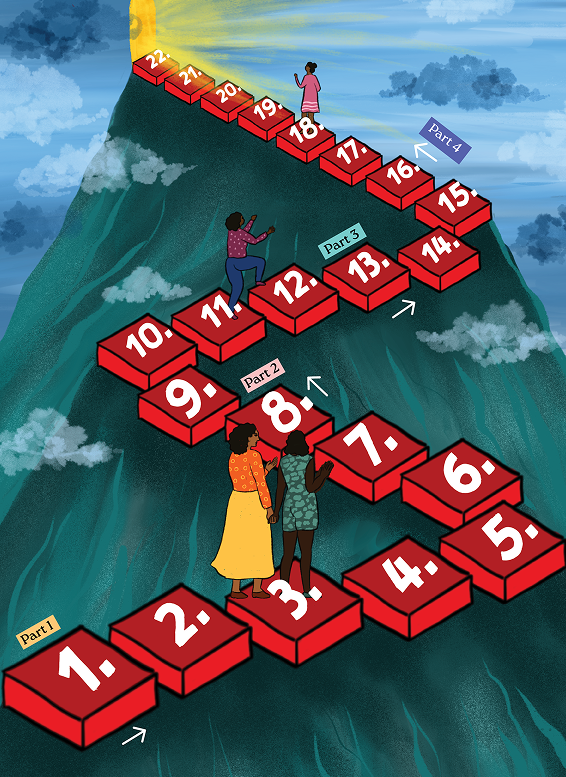
The design needed to be clear, accessible, and engaging. We adopted an illustrative and modular approach – combining narrative elements, real stories, definitions, and actionable activities. The layout was crafted to guide readers seamlessly, whether they were individuals, educators, or advocacy groups.
Crafting a Visual Language
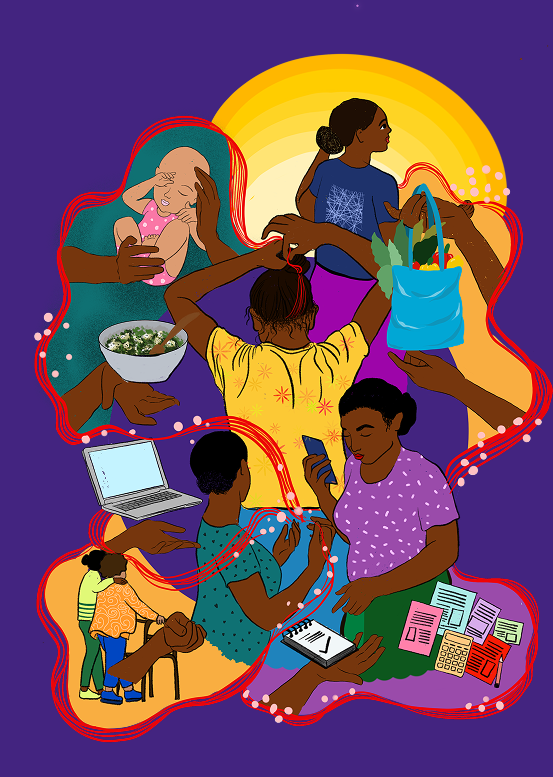
Designing for advocacy means balancing clarity with impact. We used a clean, structured layout, punctuated with illustrations that made complex concepts relatable. Our color palette was both vibrant and grounded, reflecting the urgency of the topic while maintaining a sense of empowerment. Icons and infographics were used to distill key concepts, ensuring that even dense sections remained accessible.
Design Approach:
Accessibility:
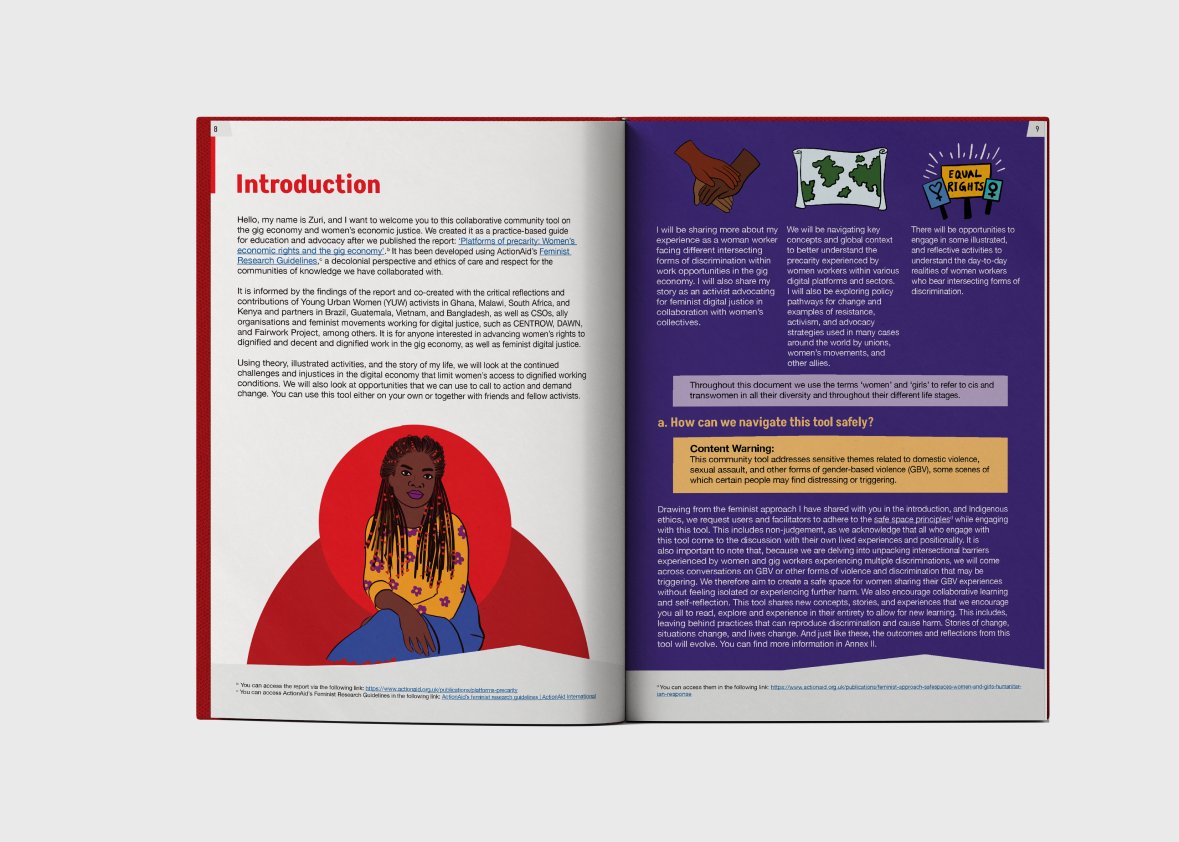
- The layout is structured with clear sections, headings, and subheadings, making it easy to navigate and understand.
- Activities and reflective spaces are included to engage readers and encourage participation, emphasizing the interactive nature of the tool.
Visual Appeal:
- Illustrations add a visual element that likely makes the content more engaging and relatable.
- The design uses visuals to break up dense text and make complex concepts easier to grasp.
Inclusivity:
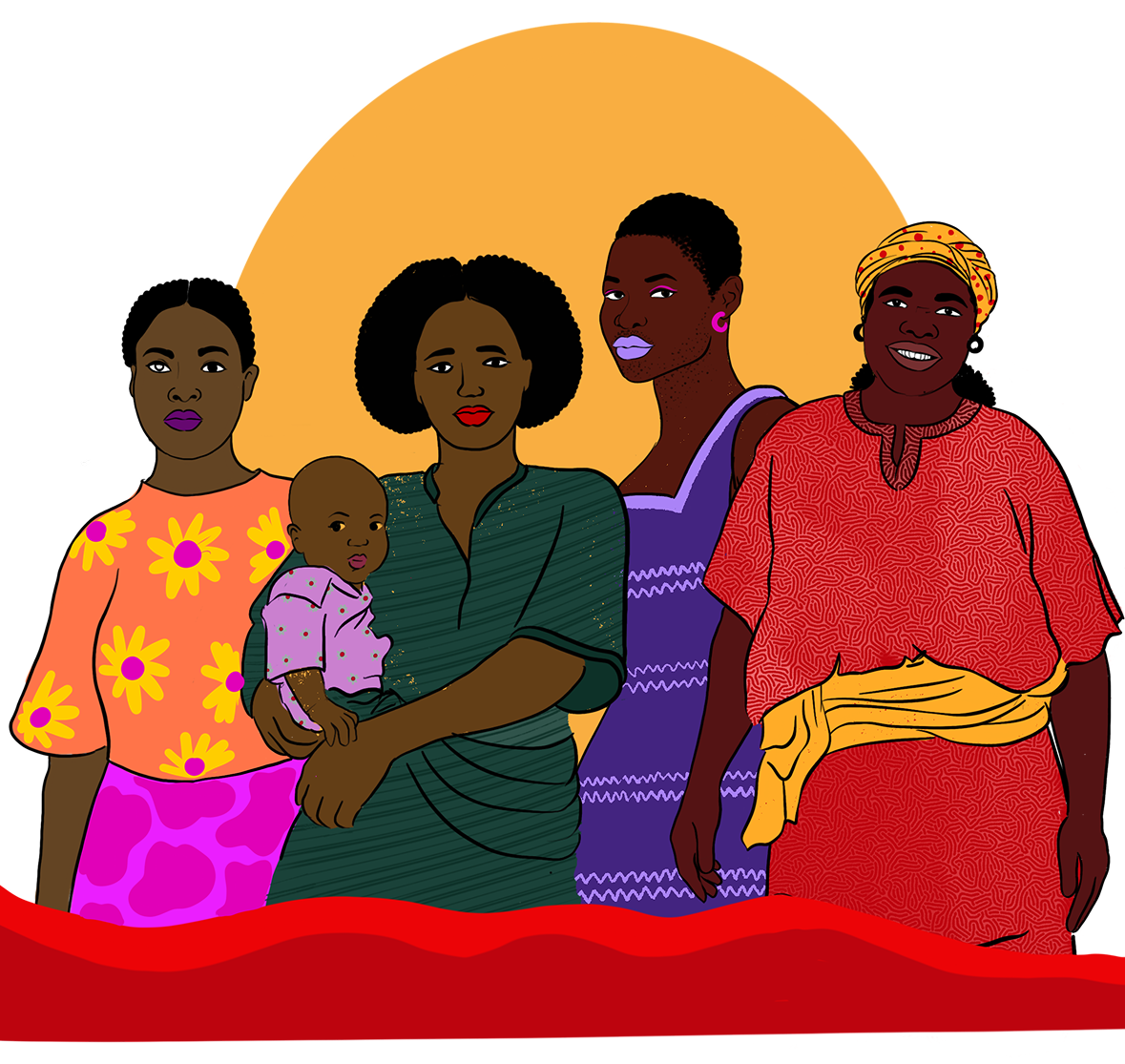
- The design incorporates diverse stories, activities, and examples, reflecting the intersectional approach of the report.
- It aims to create a safe and welcoming space for readers, aligning with the feminist principles of the tool.
Educational Focus:
-
- The layout includes activities, diagrams, and prompts for reflection, which are designed to facilitate learning and self-awareness.
- It uses structured sections to guide readers through key concepts, challenges, and solutions.
Designing for Inclusion and Empowerment
Central to the design was the voice of Zuri, whose story brought to life the realities of gig workers. Her narrative thread allowed readers to connect personally with the text, transforming statistics and policies into lived experiences. Reflective activities encouraged readers to relate their own experiences, making the tool not just a guide but a space for self-awareness and solidarity.
Collaborative Impact
The success of this tool was a testament to collaborative creation. We worked alongside the research and advocacy experts from ActionAid UK, ensuring that the design was always in service of the tool’s educational and advocacy goals.
This project was more than just a publication design – it was an act of solidarity with women workers in the gig economy, amplifying their voices, experiences, and rights. We are Stories is proud to have been part of this journey with ActionAid UK, contributing to a tool that stands as both an educational resource and a call to action.