
WHRDIC: Building a Digital Home for a Global Movement
with Women Human Rights Defenders International Coalition
Client
Women Human Rights Defenders International Coalition
Relationship
Since 2024
Services
Research, user behaviour mapping, information architecture, UX design, visual design, branding, illustration, Drupal development, and website handover.
Connecting a Global Movement
A global movement needs a shared space to connect. WHRDIC’s website brings its work, resources and collective voice into one digital home.
The project translated a large body of content into a clear, cohesive experience, helping visitors find their way through the coalition’s work.
The result is a platform that makes WHRDIC’s work more visible and invites people to explore, connect and engage.
Introduction
The Women Human Rights Defenders International Coalition is a transnational, intersectional feminist coalition of women human rights defenders, feminists, trans and non-binary activists and organisations, and their allies. Since its inception, the Coalition has played a significant role in building recognition, solidarity, advocacy, and knowledge around the specific risks and contributions of women human rights defenders across movements and regions.
When WHRDIC approached us, the task was not only to design a new website. It was to create a digital home for a complex feminist movement ecosystem.
The website needed to hold many things at once: the Coalition’s history, its members, its governance, its advocacy work, its solidarity actions, its strategic direction, and a growing archive of feminist knowledge produced by and for women human rights defenders.
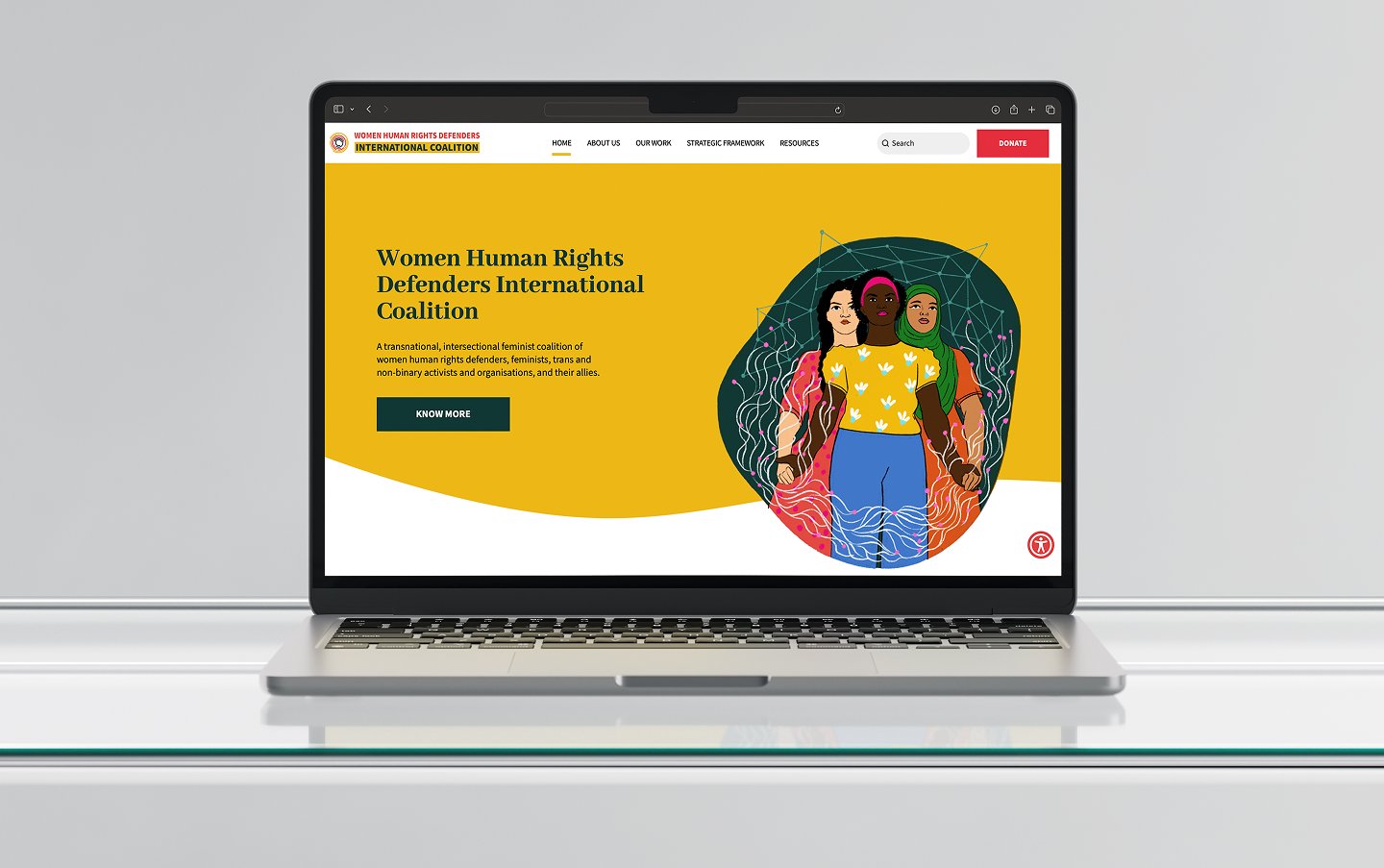
We designed and developed the website from scratch, from research and user behaviour mapping to information architecture, visual design, illustration, and Drupal development. The final platform was built to make WHRDIC’s work easier to understand, easier to navigate, and easier to sustain over time.
The Challenge
WHRDIC’s work sits across multiple regions, movements, issues, identities, and political contexts. The website had to reflect this complexity without overwhelming the people who came to it.
The challenge was to design a platform that could serve very different audiences:
- Women human rights defenders looking for resources, solidarity, and connection
- Member organisations looking for visibility and shared infrastructure
- Researchers and advocates looking for publications, reports, and tools
- Donors and allies trying to understand the Coalition’s role and impact
- Feminist movements seeking examples of collective organising and care
The existing need was not just aesthetic. It was structural.
WHRDIC needed a website that could clarify who they are, organise a large and growing body of knowledge, make solidarity actions visible, and support future content updates without depending on a developer for every change.
Research and Strategy
We began with research to understand how different users might arrive at the website, what they would be looking for, and where confusion or friction could emerge. Through questionnaires, content review, and user behaviour mapping, we identified the key jobs the website needed to perform:
Explain the Coalition clearly
Visitors needed to quickly understand who WHRDIC is, who it is accountable to, and why its work matters.
Make movement knowledge discoverable
WHRDIC’s publications, tools, and resources needed to be searchable and organised in a way that supported activists, researchers, and organisations working across different contexts.
Support solidarity and urgent action
The site needed to make statements, campaigns, and solidarity actions easier to find, share, and update.
Hold history and governance with care
WHRDIC’s herstory, impact, membership, and governance structure needed to be presented transparently and accessibly.
Build a maintainable backend
The site needed a content structure that the WHRDIC team could continue using after launch.
This research shaped the website as a movement infrastructure, not just a communications platform.
Information Architecture and UX
The information architecture was designed to help users move through the Coalition’s work in clear layers.
The main navigation was structured around four primary areas: About Us, Our Work, Strategic Framework, and Resources, with donation access kept visible for users who wanted to support the Coalition.
A major UX focus was the Knowledge Hub. We designed it as a searchable, filterable archive so users could browse resources by year, region, country, type, issue, and language. This was essential because the archive needed to serve users working across geographies, languages, and advocacy needs.
Similarly, the Solidarity Actions section was structured with filters for year, region, country, and issue, helping users locate campaigns and actions more efficiently.
Visual Design and Branding
The visual language needed to feel strong, feminist, accessible, and movement-led.
We developed a design direction that balanced credibility with warmth. WHRDIC’s work deals with violence, risk, protection, advocacy, and collective resistance. The website therefore needed to feel serious without becoming cold, and expressive without becoming decorative.
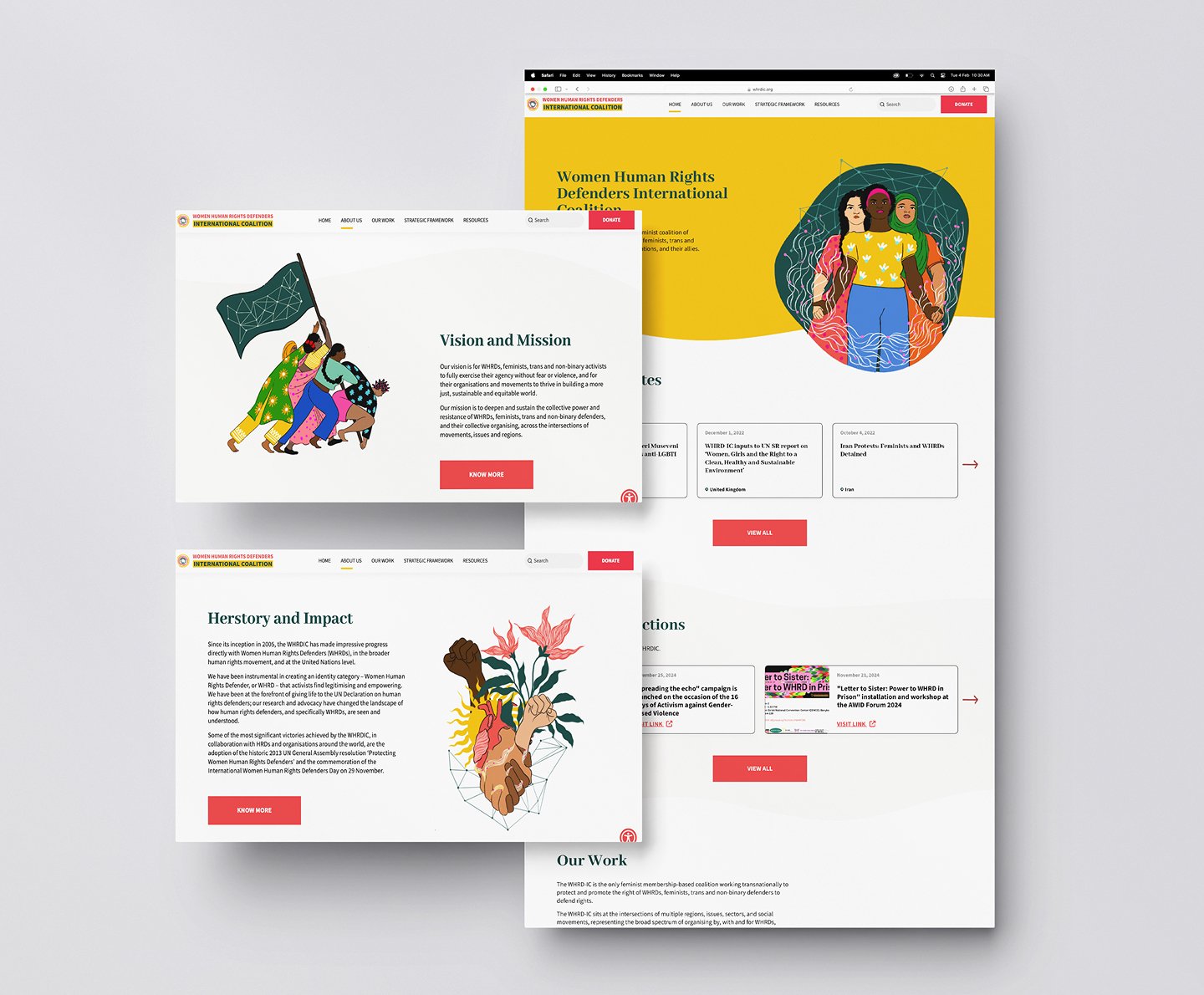
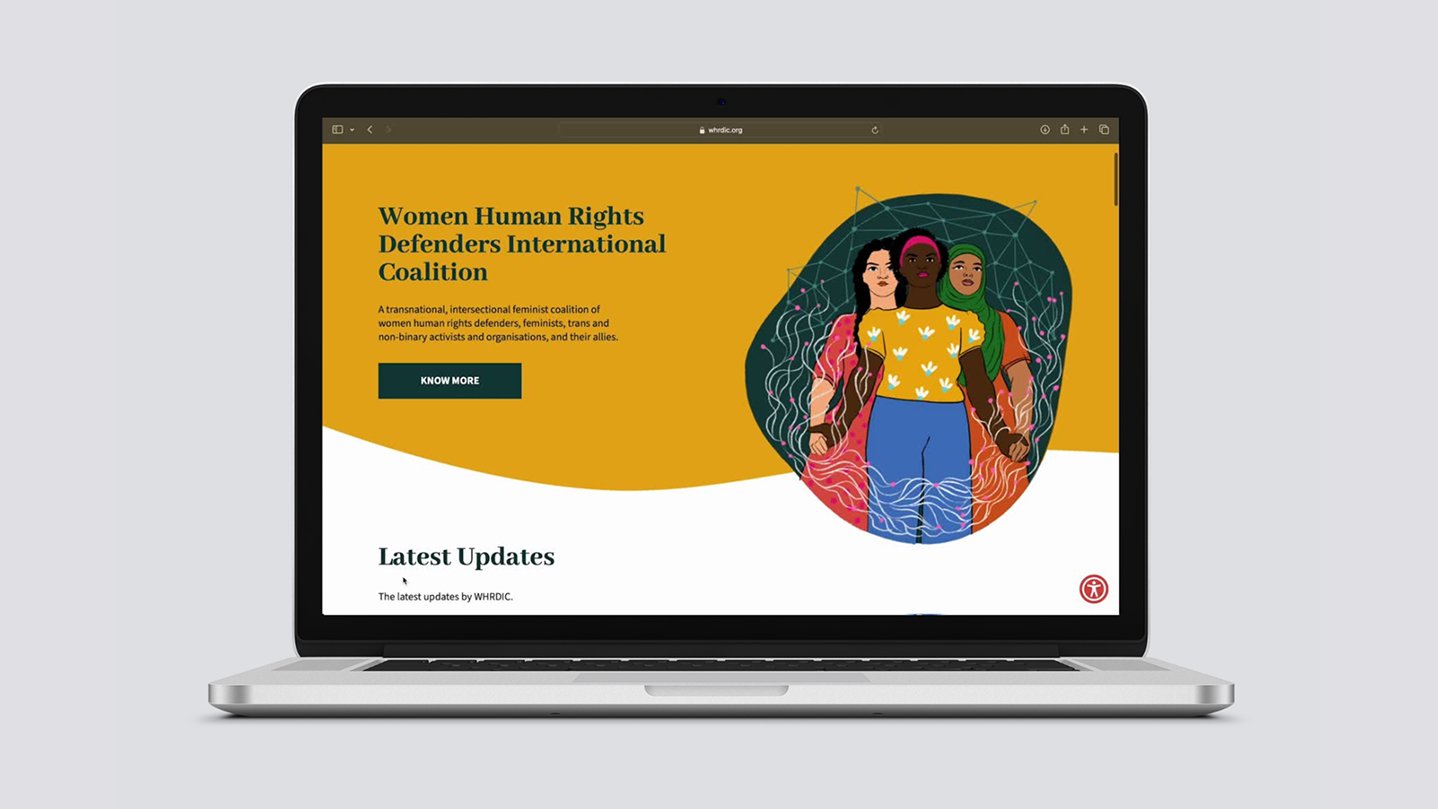
The visual system used illustration, colour, section-based graphics, member visibility, and editorial layouts to make the site feel alive and rooted in collective action.
Our design approach focused on:
- Creating a visual identity that felt feminist, transnational, and grounded
- Using illustration to humanise complex advocacy themes
- Giving each major section a clear visual anchor
- Making dense content easier to scan through hierarchy and layout
- Building consistency across pages while allowing different content types to breathe
The result is a website that does not feel like a static institutional archive. It feels like a living feminist platform.
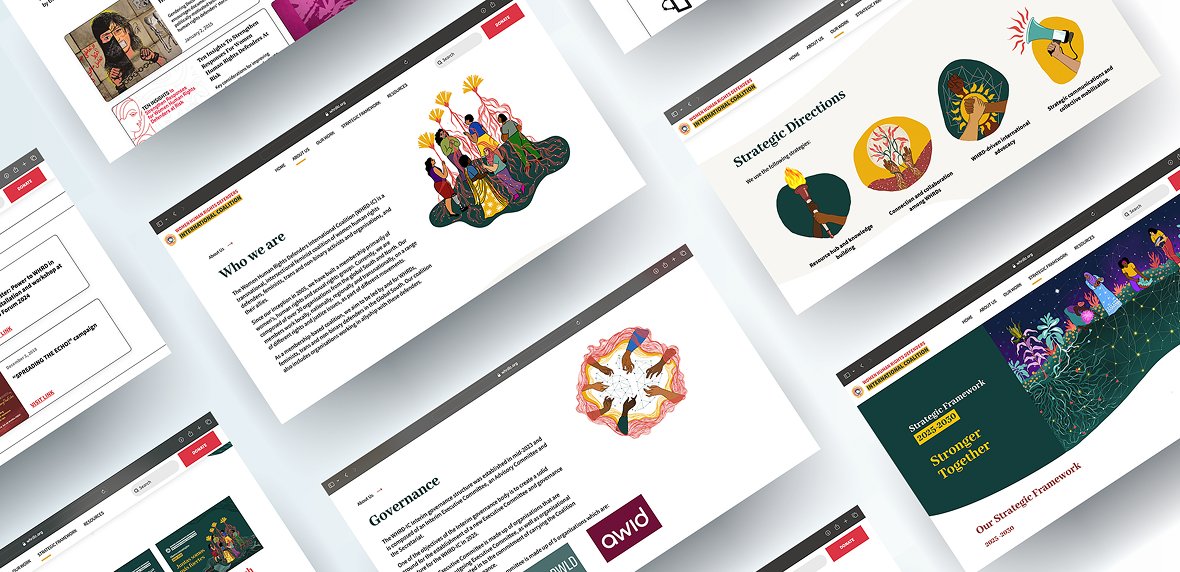
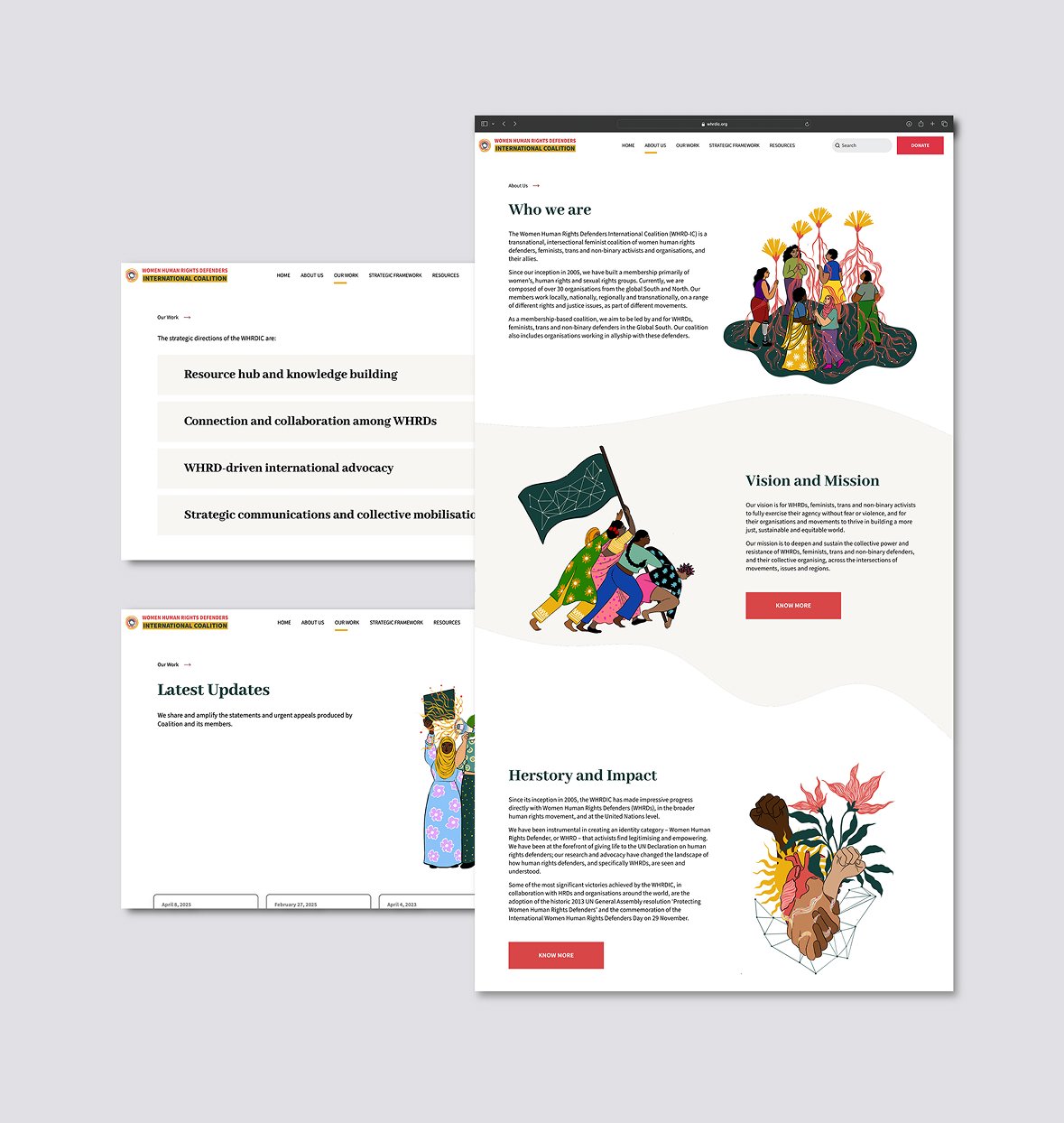
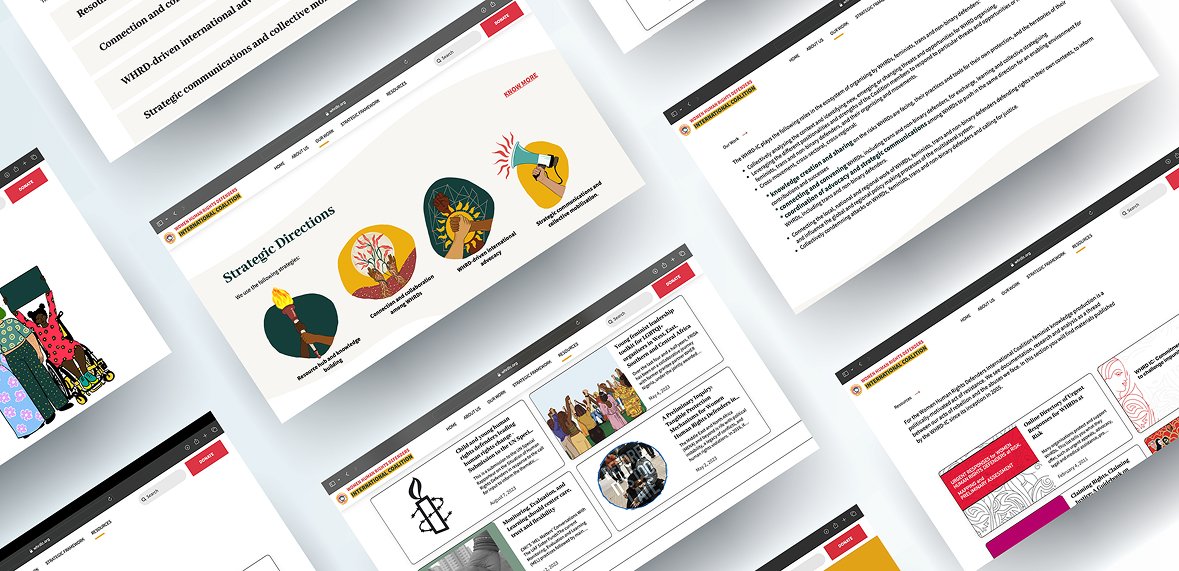
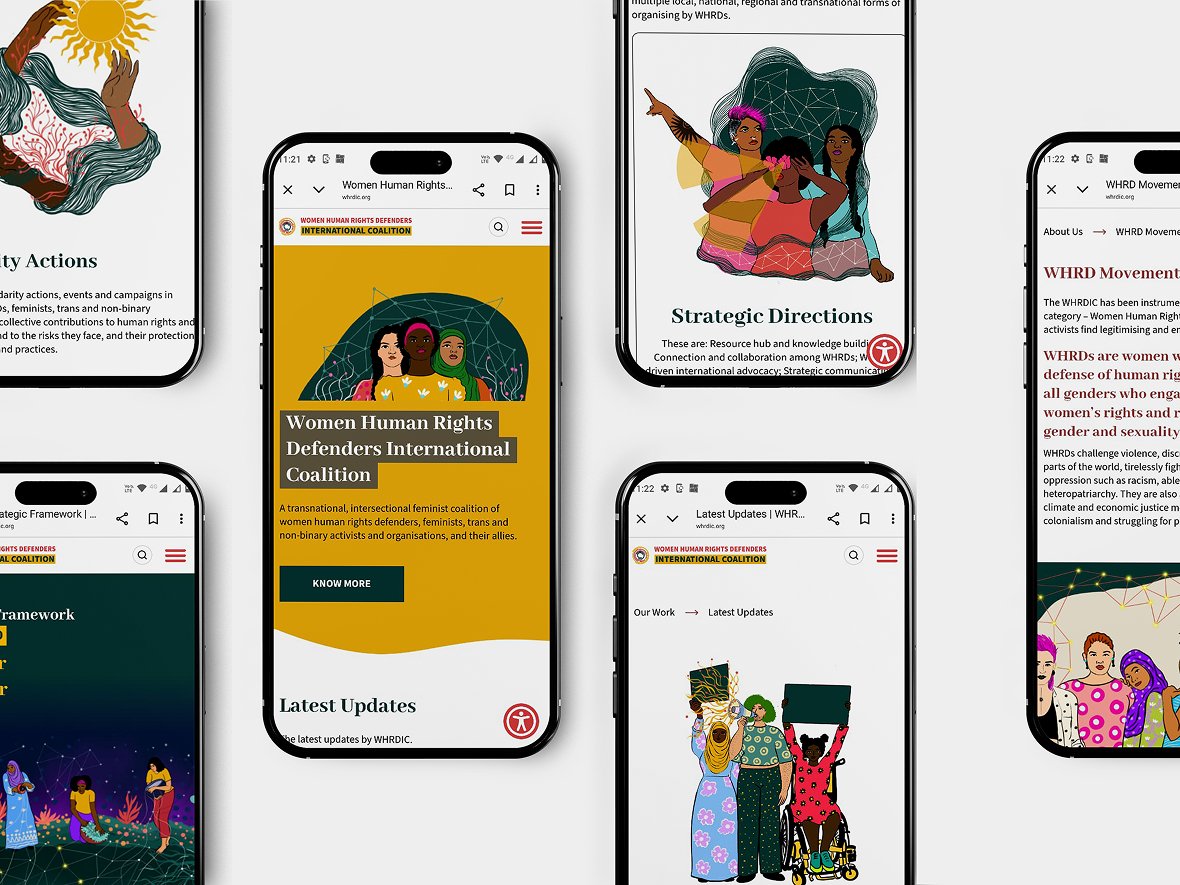
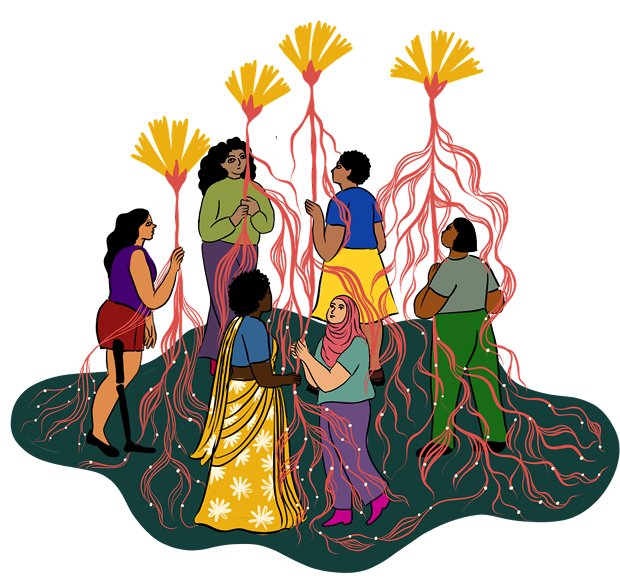
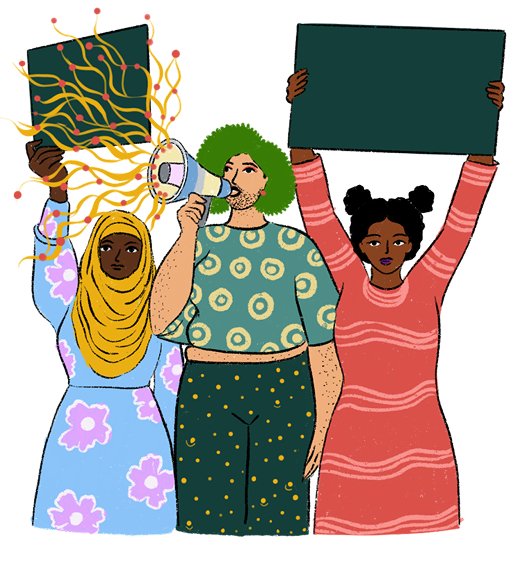
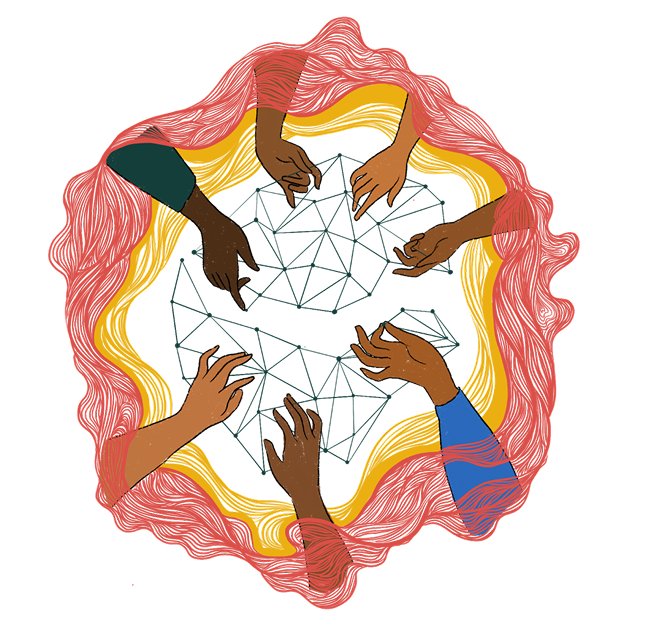
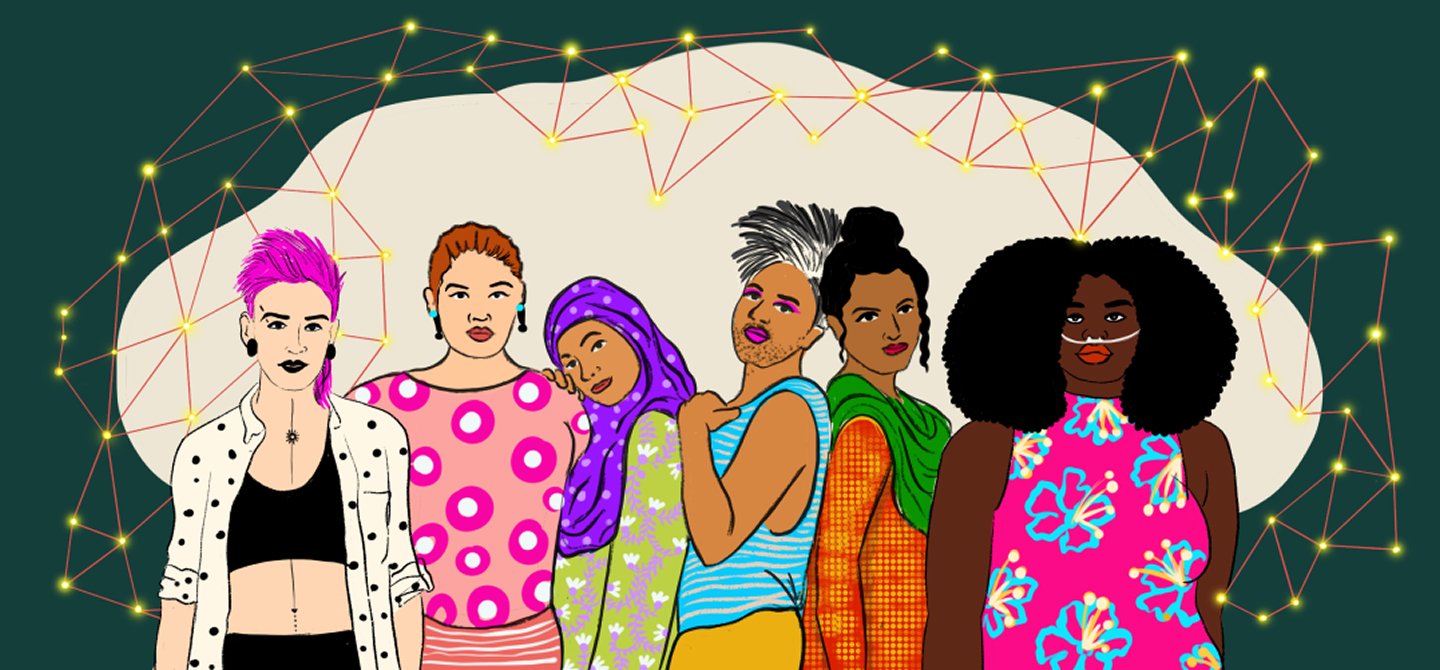
Illustration System
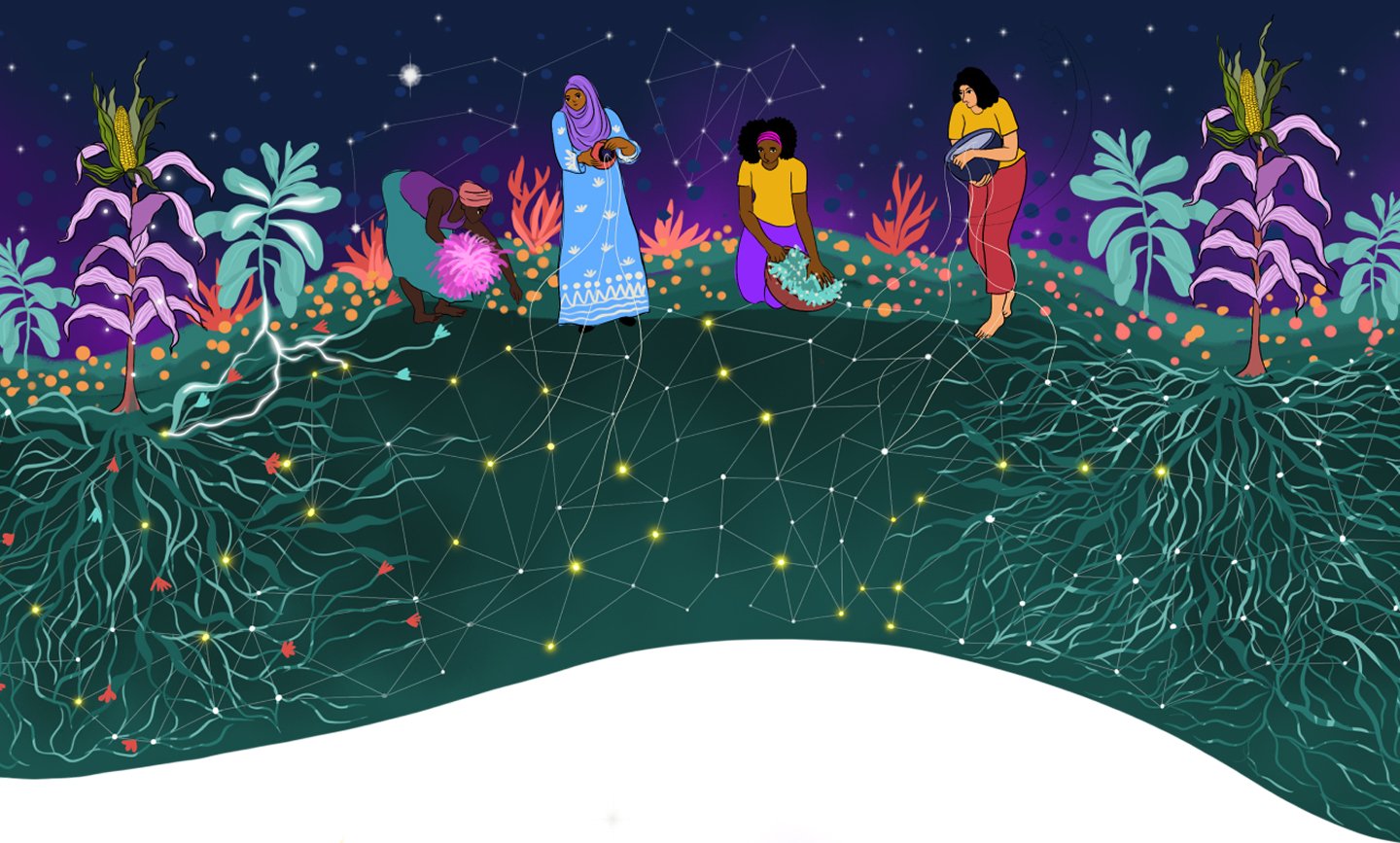
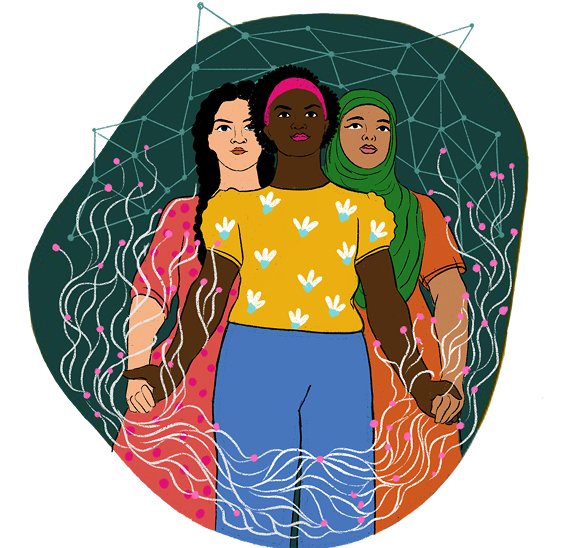
Illustration played an important role in giving the website its emotional and political texture.
The site needed to speak about defenders, solidarity, governance, knowledge, protection, and collective action without relying only on photographs or generic NGO imagery. We created illustrations and visual assets that could hold these themes with dignity and care.
The illustrations helped:
- Represent feminist organising without flattening identities
- Make abstract concepts like governance, solidarity, advocacy, and knowledge-building more visual
- Create warmth across long content-heavy pages
- Give the site a distinct visual memory
- Reduce dependence on stock images
This was especially important for a coalition working across risk-sensitive contexts, where representation requires care, consent, and political sensitivity.
Drupal Development
The website was developed in Drupal to support WHRDIC’s long-term content needs.
We built the platform around reusable content structures so the team could continue updating the site after launch. This included structured content types for updates, solidarity actions, publications, knowledge hub entries, member organisations, and strategic framework content.
The taxonomy structure was especially important. Sections like the Knowledge Hub and Solidarity Actions required users to filter content by categories such as year, region, country, issue, language, and resource type. This made Drupal a strong fit for a website that needed to manage complex, interconnected content over time.
The development process focused on:
- Scalable content management
- Searchable and filterable archives
- Reusable page components
- Clear backend workflows
- A structure that could grow with WHRDIC’s future work
- Editorial independence for the client team
We also prepared the site for handover so that WHRDIC could manage content updates with more confidence.
Outcome and Reception
The final website gives WHRDIC a clear, accessible, and maintainable digital platform for its identity, history, members, resources, advocacy, and solidarity actions.
The site now communicates WHRDIC’s role as a membership-based coalition working across the Global South and North, with 32 member organisations listed on the platform.
It also makes WHRDIC’s strategic work more visible, including its four strategic directions: resource hub and knowledge building, connection and collaboration among WHRDs, WHRD-driven international advocacy, and strategic communications and collective mobilisation.
Most importantly, the website gives WHRDIC a digital infrastructure that can support both memory and action. It preserves the Coalition’s herstory, makes feminist knowledge easier to access, and creates a public-facing space for solidarity, advocacy, membership, and movement-building.
Conclusion
The WHRDIC website was an end-to-end design and development project, but more than that, it was an exercise in designing digital infrastructure for feminist movements.
For We Are Stories, the project brought together research, strategy, UX, visual storytelling, illustration, and Drupal development to create a platform that could hold complexity with care.
The site helps WHRDIC tell its story, organise its knowledge, support its members, and strengthen its public presence. It is a space for documentation, advocacy, solidarity, and collective memory.
At its heart, this project reflects what we believe good design can do for rights-based organisations: make complex work legible, make knowledge accessible, and make movements easier to find, understand, and support.